February 27th, 2019

If Drs. Lawrence Hier and Michelle Palmer and our team at Hier & Palmer Orthodontics have recommended a palatal expander, you might be wondering what it is and how it will help you. A palatal expander is a small appliance fitted in your mouth to create a wider space in the upper jaw. It is often used when there is a problem with overcrowding of the teeth or when the upper and lower molars don’t fit together correctly. While it is most commonly used in children, some teens and adults may also need a palatal expander.
Reasons to get a palatal expander
There are several reasons you might need to get a palatal expander:
- Insufficient room for permanent teeth currently erupting
- Insufficient space for permanent teeth still developing which might need extraction in the future
- A back crossbite with a narrow upper arch
- A front crossbite with a narrow upper arch
How long will you need the palatal expander?
On average, patients have the palatal expander for four to seven months, although this is based on the individual and the amount of correction needed. Several months are needed to allow the bone to form and move to the desired width. It is not removable and must remain in the mouth for the entire time.
Does it prevent the necessity for braces?
The palatal expander doesn’t necessarily remove the need for braces in the future, but it can in some cases. Some people only need braces because of a crossbite or overcrowding of the teeth, which a palatal expander can help correct during childhood, when teeth are just beginning to erupt. However, others may eventually need braces if, once all their permanent teeth come in, they have grown in crookedly or with additional spaces between.
If you think your child could benefit from a palatal expander, or want to learn about your own orthodontic treatment options, please feel free to contact our Boynton Beach, FL office!
February 20th, 2019

When beginning orthodontic treatment, most patients ask Drs. Lawrence Hier and Michelle Palmer and our team a lot of questions about what to expect, while others choose to just "go with the flow" and leave it to us to build for them a beautiful smile. And for our team at Hier & Palmer Orthodontics, that's understandable.
But for those who do ask questions, two of the ones we frequently hear are "Will my braces hurt?" and "How long will these be on?"
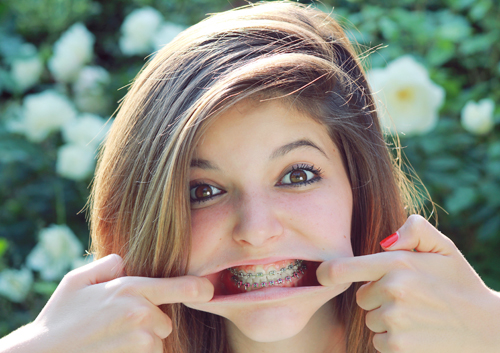
We explain to our patients that despite what they've heard, braces do not hurt when they're initially put on. Yes, you will experience soreness after your braces are placed and when your teeth start to move. Too often, our patients hear horror stories about how much it hurts to get the braces on, so they tend to over-worry. The truth is, after their braces are on, almost all patients say "that's it?" because it's actually easy and painless!
At Hier & Palmer Orthodontics, we answer most of your other questions during your initial exam. When a patient visits our office for the first time, we give him or her a time estimate of how long it will take to achieve their ideal smile. All other questions are answered at the bonding appointment when the braces are placed. We cover all the topics, everything from eating to brushing with braces, but we also know that after your initial appointment, it's natural for you to have questions about your or your child's treatment. And we are always here for you; we are thorough and always try to answer any questions or concerns you may have. As a patient, that's one thing you never have to worry about. You will always know what's going on throughout your orthodontic experience.
February 13th, 2019

When we think of Valentine’s Day, we think of cards, flowers, and chocolates. We think of girlfriends celebrating being single together and couples celebrating their relationship. We think of all things pink and red taking over every pharmacy and grocery store imaginable. But what Drs. Lawrence Hier and Michelle Palmer and our team would like to think of is when and how this joyous, love-filled day began.
Several martyrs’ stories are associated with the origins of Valentine’s Day. One of the most widely known suggests that Valentine was a Roman priest who went against the law at a time when marriage had been banned for young men. He continued to perform marriage ceremonies for young lovers in secret and when he was discovered, he was sentenced to death.
Another tale claims that Valentine was killed for helping Christians escape from Roman prisons. Yet another says that Valentine himself sent the first valentine when he fell in love with a girl and sent her a letter and signed it, “From your Valentine.”
Other claims suggest that it all began when Geoffrey Chaucer, an Englishman often referred to as the father of English literature, wrote a poem that was the first to connect St. Valentine to romance. From there, it evolved into a day when lovers would express their feelings for each other. Cue the flowers, sweets, and cards!
Regardless of where the holiday came from, these stories all have one thing in common: They celebrate the love we are capable of as human beings. And though that’s largely in a romantic spirit these days, it doesn’t have to be. You could celebrate love for a sister, a friend, a parent, even a pet.
We hope all our patients know how much we love them! Wishing you all a very happy Valentine’s Day from the team at Hier & Palmer Orthodontics!
February 6th, 2019

Kids can be picky eaters. How many times have you seen your child try to hide the peas under a mound of mashed potatoes?
At Hier & Palmer Orthodontics, Drs. Lawrence Hier and Michelle Palmer and our team understand how hard it can be to get your child to eat the recommended daily allowance of fruits and vegetables. The task of providing fun, nutritious meals becomes even more challenging if he or she wears braces. It's an age-old saying that breakfast is the most important meal of the day. These five braces-friendly recipes are not only nutritious, but they will have little Jimmy flashing his “tin grin” when he sits down at the kitchen table in the morning.
- Scrambled eggs are soft and easy to eat if you have braces. If you drown them in ketchup (which many kids love to do), eggs become even mushier. Minimal chewing is required, and that’s the key to a braces-friendly recipe.
- A healthy breakfast provides energy and jump-starts metabolism. A smoothie is not only a good source of fruit, but it’s also gentle on braces. More importantly, smoothies are fun to create. You can toss anything in the blender (bananas, mangoes, strawberries, spinach) and create a drink that’s loaded with vitamins and antioxidants.
- If you wear braces, eating crunchy cereals or granola for breakfast is out of the question: Bite down the wrong way and you might snap the wires or dislodge the brackets. However, you can get your grains and oats by substituting oatmeal for cereal. This mushy breakfast treat has a host of health benefits.
- Pancakes are not the healthiest breakfast choice. Still, this Sunday morning favorite is braces-friendly. The idea is to make it healthier by hiding blueberries in the pancake batter just like your child hides peas in the mashed potatoes.
- Toast with jam is ok, but skip slathering peanut butter on the bread. If you have braces, the general rule of thumb is to steer clear of foods that are hard or chewy. These types of foods can break wires. Of course, most kids will agree that toast isn’t the most exciting breakfast recipe. Make it a Pop-Tart instead!
For more braces-friendly recipes, please give us a call at our convenient Boynton Beach, FL office!